🚀 Space🎂 8-14 years📅 May 18, 2026
Newly Discovered Asteroid to Pass Close to Earth
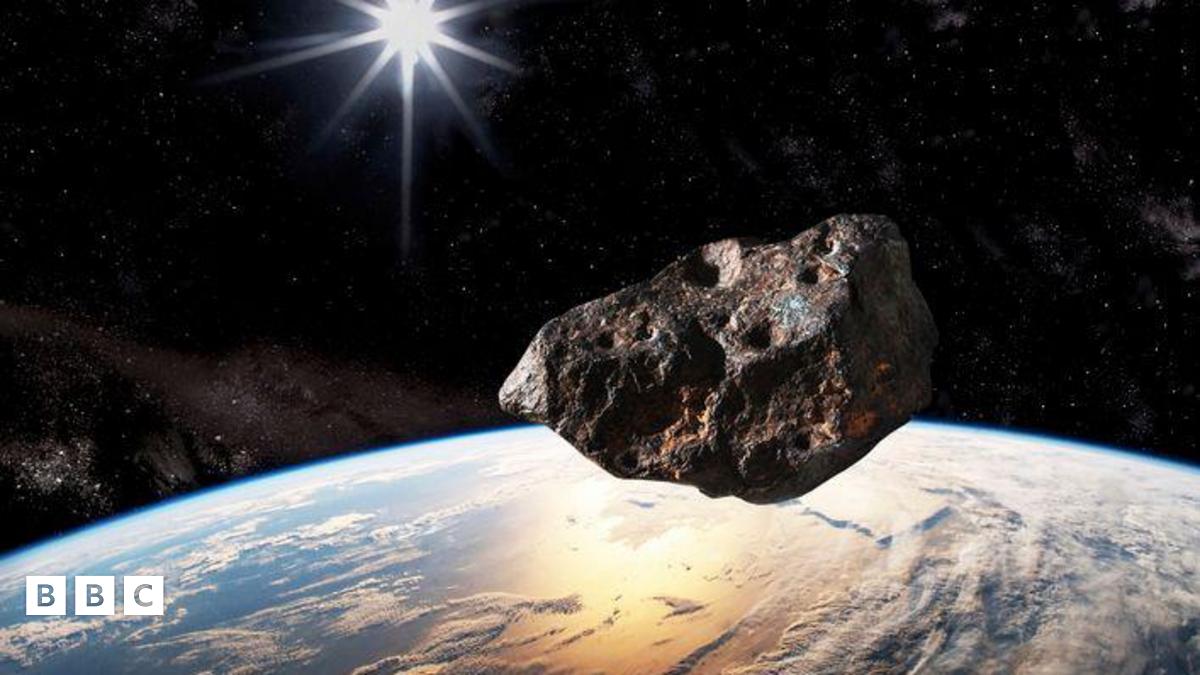
A newly discovered asteroid, 2026 JH2, will pass close to Earth this week. The asteroid is about 35 meters wide and will pass by at a distance of 50,000 miles. Scientists say it will not harm Earth and will pass at a safe distance.
ReklamPremium'a geç →
📢
The News Of Kids
Reklamsız okumak için
Newly Discovered Asteroid
This week, a newly discovered asteroid will pass close to Earth. The asteroid, called 2026 JH2, is about 35 meters wide and as long as a soccer field. Scientists say it will pass by on Monday, within the Moon's orbit.No Need to Worry
But there's no need to worry. Scientists say the asteroid will not harm Earth and will pass at a safe distance. 2026 JH2 is classified as a near-Earth asteroid.Discovery
2026 JH2 was discovered last week by the Mount Lemmon Survey, an astronomical project at the Mount Lemmon Observatory in Arizona, USA. The asteroid will pass by at a distance of about 50,000 miles, which is one-fourth of the distance between the Earth and the Moon.What are Asteroids?
Asteroids are big rocks that float in space. They orbit the Sun and are much smaller than planets. Asteroids come in different sizes.Comets
Comets are also objects that float in space and orbit the Sun. But comets are different from asteroids because they are made of ice and dust. When a comet approaches the Sun, the heat melts the ice and dust, creating a cloud of gas. This forms a beautiful and bright tail.Observation
2026 JH2 is too faint to be seen with the naked eye, but it may be visible with a telescope in some areas when it makes its closest approach to Earth.Did You Know?
Asteroids and comets tell us about the formation of our Solar System. Scientists study these objects to understand how the Solar System was formed and how it has changed.Conclusion
2026 JH2 is an asteroid that will pass close to Earth. Scientists say it will pass at a safe distance. This discovery will help us learn more about space. In the future, scientists will discover more asteroids and comets and learn more about our Solar System.📰 Source:BBC Newsround