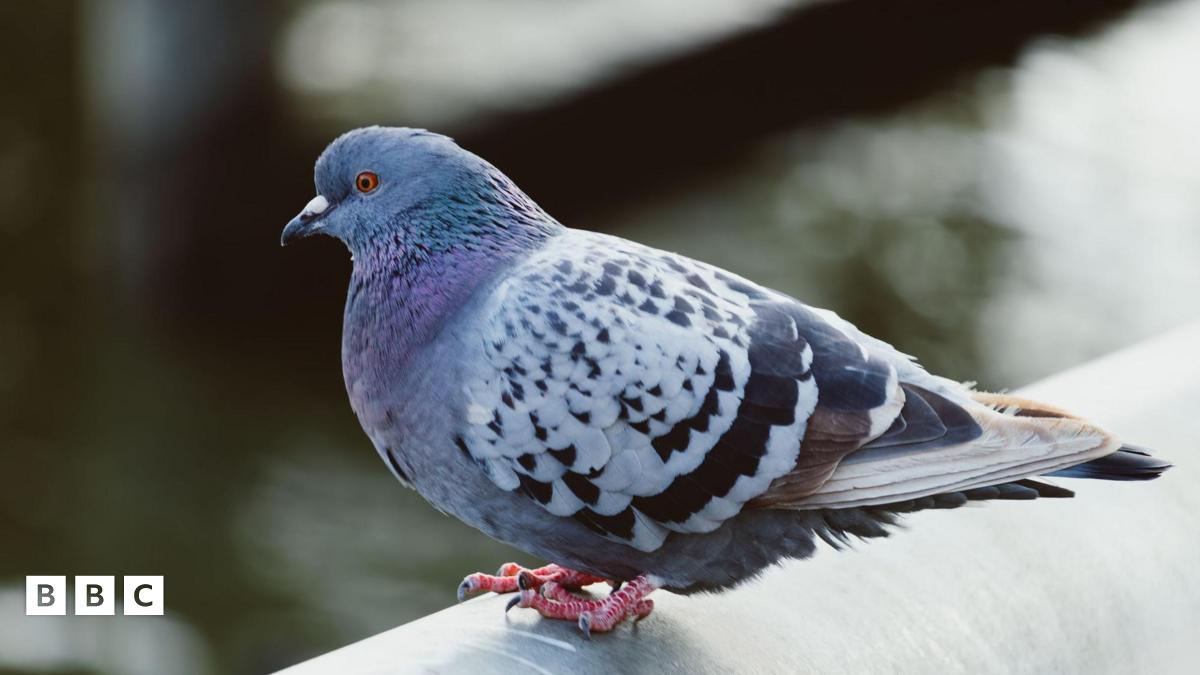
Pigeons Rely on Their Stomach for Navigation
Scientists have been studying how pigeons find their way for years. A new study shows that pigeons have special cells near their stomach that act like a compass, helping them navigate.
The News Of Kids
Reklamsız okumak için
Have you ever wondered how pigeons and other animals find their way? Scientists have been trying to answer this question for years. Now, a new study suggests that pigeons' ability to navigate might be linked to special cells near their stomach. These cells can detect the Earth's magnetic field, which helps pigeons find their way. Scientists already knew that pigeons use the Earth's magnetic field to navigate, but they didn't know how they detected it. Researchers in Germany found special cells near the pigeons' liver that can detect the direction of the magnetic field. These cells act like a built-in compass, helping pigeons navigate. To test this, scientists did an experiment where they treated some pigeons with a medicine that affected their ability to detect the magnetic field. Then, they took the pigeons 12 miles away and released them. The pigeons that didn't get the medicine flew back home in about 70 minutes. But the pigeons that got the medicine flew in random directions and didn't make it back home until the next day. This proved that pigeons can detect the magnetic field and use it to navigate. Did you know that pigeons were used to send messages during wars? Some pigeons can even fly back home from 4,000 miles away! Understanding how pigeons navigate can help us learn more about how animals find their way. This can help pigeons and other animals survive and thrive in the wild.
📰 Source:BBC Newsround