Voyager 1: The Spacecraft That Is One Light‑Day From Earth
NASA’s Voyager 1 is reaching a huge space milestone—it is now one light‑day away from Earth! Find out how far this explorer has traveled, what a 'light‑day' actually means, and why this journey is so cool for kids and scientists.
The News Of Kids
For ad-free reading
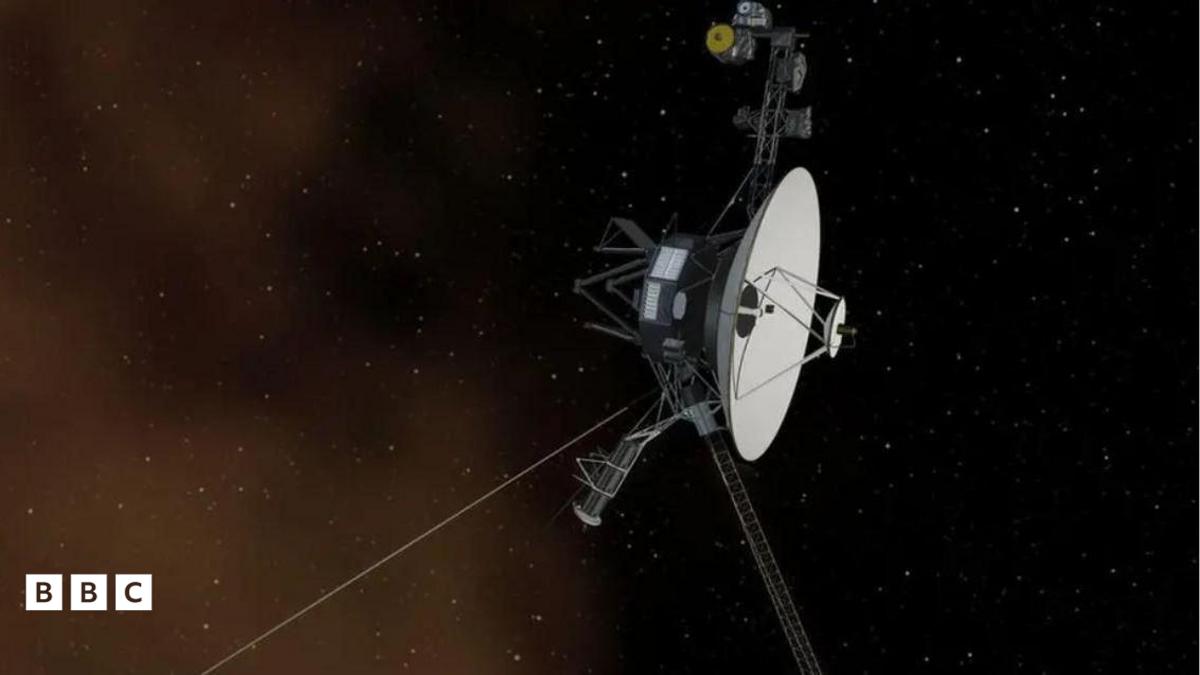
What Is Voyager 1? Voyager 1 is a small metal spacecraft launched by NASA way back in 1977. It was built to zoom past the giant planets Jupiter and Saturn and then head out of our solar system. Even though it was only supposed to last for five years, it is still sending us information from space after almost 50 years! How Far Is It? Right now, Voyager 1 is more than 15.9 billion miles (about 25.9 billion kilometers) away from Earth. It is so far that a radio signal takes almost 24 hours to reach it. In November 2024, it will be exactly one light‑day away, which is the distance light travels in 24 hours. What Does One Light‑Day Mean? Light is super fast—it travels at about 186,000 miles every single second! In one day, which has 86,400 seconds, light travels about 16 billion miles. That is the distance Voyager 1 will be from Earth on November 18, 2024. Why Is This Exciting? Did you know? Voyager 1 is the first thing ever made by humans to leave our solar system and enter the space between stars. It carries a gold record filled with music and pictures that might one day be found by aliens! Scientists use the information it sends back to learn all about the deep, mysterious space outside our Sun's reach. What Will It Do Next? Voyager 1 is currently heading toward a star called Gliese 445. It is more than 17 light‑years away, so it will take the spacecraft about 40,000 years to reach it. For now, it will keep exploring the quiet, empty space between stars. Fun Facts About Voyager 1: It launched only 16 days before its twin, Voyager 2. Voyager 2 took a different path to visit Uranus and Neptune. Together, these two spacecraft have traveled further than any other human‑made objects. The gold record on board has music from all over the world, including songs by Beethoven, jazz, and even a recording of a child saying hello! How Does This Matter to Us? Even though Voyager 1 is super far away, the science it collects helps us understand the universe better. Its data helps us learn about 'space weather,' which can help keep our satellites and astronauts safe. It also shows us just how far human curiosity can take us. Questions Kids Might Ask: How does it keep working after so many years? It uses a special power source that turns heat from radioactive material into electricity. Can we see it with a telescope? No, it is too small and far away, but we can detect the light it reflects. Will it ever come back home? No, it will keep traveling out into the dark space forever. In Summary: The journey of Voyager 1 shows how smart and brave humans can be when they want to explore. Reaching one light‑day from Earth is a giant milestone that reminds us there is no limit to how far we can go. Scientists will keep listening for its signals, and kids like you can keep learning about space, science, and the amazing things we can build. Future Outlook: In the next few decades, Voyager 1 will keep sending data from interstellar space. Its twin, Voyager 2, will hit the one light‑day mark in 2035. Together, these space explorers will keep sailing through the cosmos for many more years.
📰 Source:BBC Newsround